Tag: survival

5 Helpful Tips to Improve Your Map Reading Skills

Map and compass

It’s National Map Reading Week! I was lucky enough to be taught basic navigation skills at an early age but I appreciate that for many people, maps designed for outdoor activities are about as comprehensible as the financial pages of The Sunday Times. But it’s never too late to learn. If you struggle to figure out which way’s north and whether the brown circles on the map represent a hill or a valley, here are some helpful tips to help you improve your map reading skills. Why not get outside this weekend and try them out?

Tip 1: Pick the Right Map

There are lots of different types of maps at varying scales which can make it confusing to know which one to choose. The scale will usually be expressed as a ratio, for example 1:50,000. The bigger the number after the colon the less detailed the map will be. Ordnance Survey provides a range of maps that cover the whole of UK at a range of scales.

Some people prefer the Harvey maps, particularly in mountainous areas. They look a bit different to the OS maps but are designed to provide a simpler view of the landscape (particularly where there are lots of contours) to help you navigate more easily. Harveys also sell specific maps for long distance walking and cycle trails. You can usually get the whole route printed on one map which can save a lot of space in your pack!

Here’s a quick guide to some common UK maps to help you work out which is best for you:

  • 1:50,000 OS Map – good for people who want a less detailed map that covers a large area. All roads and main footpaths will be marked, but there’ll be less detail to help you navigate off-road than other maps. Useful for cyclists who mainly stick to roads.
  • 1:25,000 OS Map – for many years the OS Explorer range has been the go-to map for outdoor activities. The maps show all rights of way and distinctive features and have a high level of rock and contour detail in the mountains. The only downside is that in mountainous terrain it can be tricky to read the map accurately because of the level of detail. The best map for all-around outdoor use.
  • 1:40,000 Harvey Mountain Map – Harvey focus mainly on mountainous areas of England, Scotland and Wales. Their maps look quite different to OS maps but are great for hiking, biking and running in the more remote, hillier parts of the country. The maps don’t contain all the detail of a 1:25,000 map but this makes them much easier to read. Unlike OS maps that cover the whole country, Harvey maps cover a specific area. This means that instead of having to buy multiple OS maps you can cover the same area with one Harvey map. Best map for general hiking and mountain biking in national parks and upland areas.
  • 1:25,000 Harvey Superwalker Maps – focused on popular upland areas of the UK, these provide a higher level of detail than the Mountain Maps but still focus on readability. If you’re navigating in complex mountain terrain, this is the best map for you.

A lot of people prefer paper maps but if you enjoy getting outdoors in a lot of different places then the OS Maps app is a great low-cost way of accessing all the maps in the country on your phone. However, for learning basic navigation skills a paper map is much easier to use. Plus, it never runs out of battery!

Tip 2: Get Used to Using a Compass

A compass is the second important tool in your navigation toolkit. With a map, compass and some basic skills, you should be able to navigate your way through most parts of the country with ease. Even if you use a GPS device it’s worth carrying a map and compass as a backup. (And know how to use them!). If you get into the habit of taking your compass out with you on walks, runs or bike rides then you’ll keep up your skills and over time they’ll become second nature.

Your compass has a base plate and a rotating bezel with angles marking the 360 degrees of a circle. Inside is the compass needle which will rotate as you move around. The important thing to remember is that the red end of the arrow will always point north – even if it’s not lined up to the north marker on the bezel. (There are actually three different ‘norths’ but this can be quite confusing for people who are new to navigation so for the time being just remember that red equals north.)

The simplest compass skill is to orientate your map to north. Even if you can’t remember how to take a compass bearing, by orientating your map in the right direction, you can pick out features around you to pinpoint your location.

Whichever map you use there’ll be a grid of squares marked over it. The top of the map will be north so the vertical lines that run up the map are on a north-south line. To orientate your map, hold the compass flat on top of the map and turn the map until the red north arrow is pointing along the vertical grid lines to the top of the map. Remember you need to turn the map and not the compass! If you’re facing south this will mean that the map feels upside down, but don’t worry, you’ll soon get used to navigating by the features on the map and this won’t be a problem.

Once you’ve orientated your map have a look at the landscape around you and see how features appear on the map. Can you spot that big hill over to your right? How about the river on your left? If you’re using footpaths or bridleways then most of the time by orientating your map correctly you can follow your planned route without the need for more complex compass skills. In the mountains, it can be a different story and you’ll want to know how to take compass bearings and learn more advanced skills so you can navigate effectively in poor weather.

Tip 3: Understand Basic Topographical Features

Maps can be confusing things full of brown squiggly lines and coloured symbols. It’s no wonder people get confused! But it’s worth taking a bit of time to understand the different features a map represents. Roads, footpaths and water features such as lakes and big rivers are usually quite obvious and easy to see. What most people struggle with are contours. Unfortunately, if you want to go walking in the mountains you’re going to come across a lot of contours and you’re going to have to use them to navigate.

Contour lines show changes in height. On a 1:25,000 map there is one contour line for every five metres of vertical height. Some contour lines have a height marked on them. If you have a GPS device that measures altitude you can use these to help you work out how far up or down a hill you are. Contours are continuous and follow the shape of the land. If you walk along a contour line you’ll always be at the same height.

Contours also tell you how steep a slope is. The closer together the brown lines, the steeper the hill. This makes hills and mountains quite easy to spot on maps as you have concentric circles that get smaller and smaller as you get towards the top of the hill.

Next time you go out walking or running try and match the typographical features you see on the ground to your map. A great way of getting better at using contours to navigate by is to try orienteering. Orienteering maps are much more detailed than OS maps and show almost every feature on the ground. You can learn how different landforms are represented and scale this up to the big mountains when you go hiking.

Tip 4: Trust the Map

Sometimes if you’re lost it can feel as if the map doesn’t match what’s on the ground. Your brain tricks you into thinking that you’re right and the map is wrong. Believe me, from bitter experience I know that the map is always right! If you can’t match the features on the map to the features on the ground this probably means you’re not where you think you are.

If you end up in this situation you have a couple of options:

  • Walk back until you get to a point where you’re certain of your location and the map matches the features on the ground. For example, this could be a path junction or where a path crosses a river
  • Work out your current location using your map and compass.

If you choose the second option then your first step is to orientate your map (see tip 2). Then try and remember your last known location and pinpoint this on the map. Presuming you’ve been checking your map as you go, this shouldn’t be too far away and it’ll give you an indication of whereabouts on the map you might be. Once you’ve done this look for some distinctive features around you – for example, a large hill, a saddle between two hills or a church spire in the valley below. Ideally, you want to pick three or four very distinctive features. Find these on the map and using these points you should be able to narrow down your location. Then look for any small features nearby to help you pinpoint your exact spot.

Once you’re confident about where you are then you can carry on walking or retrace your steps if necessary. Just remember the map never lies!

Tip 5: Get Out and Practice

The only way you’ll get better at navigation is to practice it. Like everything, this takes time and can be frustrating. But you don’t need to go on a full day out in the hills to get some practice in. Get outside in the evening with your local map and walk on the footpaths around your home. Look at what features you pass and how they’re marked on the map. How does the vegetation change and what colours signify this on the map? What buildings are recorded and what buildings aren’t? Can you predict when you’ll pass each five-metre contour line?

As you know the area you’re unlikely to get lost so you can perfect your map reading skills without worrying about whether you’ll make it home in time for dinner.

Happy navigating!

7 Tips To Stay Cool When Exercising in the Heat

Woman Exercising in the Heat

It’s been scorchio in the UK this week! Have you been making the most of the good weather? Or is exercising in the heat too much for you to deal with? (And sunbathing with an ice cream too tempting.)

I have to admit to having a bit of a love-hate relationship with the heat. Sun is great. Warmth is lovely. But as the thermometer starts to rise, I begin to wilt. Much above twenty degrees (centigrade, for you non-Brits) and I’m scurrying for a patch of shade. Ironically, my better half is something of a sun lover. Which makes for a heated debate about optimum climbing conditions when we climb in hotter parts of the world.

Although exercising in the heat can have benefits, particularly if you’ve got a race in a hot country coming up, it also has dangers. Exercising raises your body temperature and, if you’re already hot from being in the sun, this could push it to dangerously high levels. Dehydration, heat exhaustion and heat stroke are all things to watch out for.

Here are some tips for staying safe when exercising in the heat.

Exercise Early In the Morning

You can beat the heat by exercising first thing in the morning. Try and juggle your schedule so you can get out early, or get up an hour earlier in the morning to take advantage of the coolest part of the day.

If you’re really not a morning person then exercising late at night is another option. It’ll still be warm and muggy, but you won’t have the sun blazing down on you.

Keep Hydrated

Dehydrating is one of the main risks when exercising in the heat. Although you may want to carry water or an electrolyte solution when training, it’s just as important to make sure you’re hydrated before you start. This can be tricky if you’re exercising first thing in the morning, as you’ll dehydrate overnight. (Unless you’re one of those crazy people who doesn’t sleep.)

If you’re exercising in the evening, check the colour of your pee throughout the day. Pale yellow is good, dark yellow or brown means you need to drink more. Checking your pee is a good way of making sure you’re not drinking more than you need to.

Make Sure You’re Replacing Sodium

When you sweat, you’re not just sweating out water but also sodium. Our bodies need sodium to help keep a proper balance of water and for nerve and muscle function. You’re likely to get most of the sodium you require from your food, but your body may crave a little extra salt during hot weather.

An electrolyte solution can help rebalance your sodium levels after a hard workout (as opposed to energy drinks which tend to be full of sugar). Don’t overdo the electrolytes though as you could end up with too much sodium in your body.

Slap On the Sunscreen

As you’ll be sweating off sunscreen, you may want to opt for a higher factor sunscreen when exercising. You want something that’s water resistant, at least SPF 30 and protects from both UVA and UVB rays. If you’re doing a long run, hike or bike ride, you’ll probably need to reapply sunscreen part way through.

Take It Easy When Exercising In the Heat

If you’re used to training in cooler temperatures the heat can feel debilitating at first. You may feel slow and sluggish and be tempted to push harder as a result. But listen to your body. If it’s telling you to slow down, then slow down. You can start increasing the length and duration of your workout when your body begins to acclimatise to the heat.

Wear Loose, Light-Coloured Clothing

Light-coloured clothing will help reflect the heat and loose clothing allows air to reach your skin and cool you down. Save the dark, tight clothing for winter.

Go indoors

Now, we all know I’m a fan of the outdoors. The whole point of this blog is to promote and encourage you all to get outdoors! But, even I have to admit that sometimes gyms have their place. Not that being in a sweaty gym is the most pleasant experience. But at least most of them have air conditioning. So if the mercury in the thermometer continues to rise, going to the gym may be a safer option than exercising in the heat.

Review: The SOL (Survive Outdoors Longer) Emergency Bivvy

SOL-emergency-bivvi
Emergency kit is a tricky thing. It’s like an insurance policy – you’re spending money on something you hope never to have to use. But I’ve spent enough time in the hills to know that accidents can happen however prepared you may be. And come the day that you do need it, you’ll be really glad you spent an extra few pounds on a product that could, quite literally, save your life.

For years, the traditional foil survival blanket filled the role of emergency protection against the weather or at least tried to. Foil blankets are all very well when it’s a reasonably warm, calm day. But on a rain-lashed mountainside, they’re about as much use as a toothpick on an ice field. And the good old law of sod says, that if you’re ever going to need an emergency bivvy, it’s not going to be on a beautiful summer’s day.

That’s where the SOL Emergency Bivvy comes in. It’s not much bigger or heavier than a foil survival blanket, but it has a much higher chance of keeping you warm and dry. A foil blanket is unlikely to save your life – this piece of kit could.

The SOL Emergency Bivvy

I bought the SOL Emergency Bivvy some years back when I was after a super-lightweight emergency bag for running mountain marathons. Even I, trying to get my pack weight down as much as possible, couldn’t begrudge the tiny 3.8oz weight. It has been my constant companion since; happily snuggled at the bottom of my rucksack ready for the day it will be needed.

The SOL Emergency Bivvy pretty much does what it says on the tin. Unlike other SOL bivvy bags which are designed to be used instead of a sleeping bag, this is very much a keep-you-alive, last resort option. So don’t expect to get a good night’s sleep if you’re using it on its own. (Respect to Tom and Craig from Hikeordie, who slept in a field for four days as part of their test.)

SOL Emergency Bivvy specifications

The SOL Bivvy works by reflecting your body heat – up to 90 percent according to the manufacturer, though it’s a bit unclear as to how this is measured. The outside of the bag is a bright, ‘help me’ shade of orange, which will come in handy if you’re awaiting rescue, though not if you’re stealth bivvying in a farmer’s field.

The bag is made from polyethylene, which has some stretch, so unlike your foil blanket, it shouldn’t rip when you’re getting in and out. With seam-sealed edges, it’s completely waterproof and windproof, but bear in mind it’s not breathable. If you’re wrapped up in it for a while, you’re likely to get some condensation inside.

Unwrapped, it’s 84 inches in length, long enough to be pulled over the head of even a tall person (for evidence of this, check out this video). It’s also pretty wide, so if you’re skinny you could probably fit two of you in it to help keep warm. (No, I’m not kidding – sharing body heat is a tried and tested strategy for warding off hypothermia. Choose your hiking companions wisely!)

Often emergency survival kit is designed to be single use. If you’ve ever tried to fold a foil survival blanket back up, you’ll know that it’s an exercise in frustration. Fortunately, the designers of the SOL Bivvy took this into consideration. The bivvy comes with a nice stuff sack that’s twice as large as the rolled-up bivvy. While it does take about ten minutes to get it rolled up tight, it will fit back in the stuff sack after use.

What to use it for

Although it’s termed a ‘bivvy’, the SOL Emergency Bivvy is not intended to be used as a regular bivy sack. If you’re after something to use for lightweight bivvies on a planned basis, check out the SOL Thermal or Escape Bivvy. But as an emergency piece of kit, it beats the old foil blanket hands down, and at £17, it’s an insurance policy you can’t afford not to take.

Have you used the SOL Emergency Bivvy? Let me know how you rated it!

Going Back to School: A Wild Day out in the Woods

Bushcraft-day-forest-school

Mmmm, leeks roasted in the fire’s embers

This weekend I went back to school. Not to the bricks-and-mortar schools of my childhood, but to a new, different type of school. It has no walls, no ceiling and the floor is pretty muddy. This is Forest School.

The Forest School movement in the UK has steadily grown since it was brought over to the UK from Scandinavia in 1993. It offers an alternative model of education: one based on play and experiential learning that teaches self-esteem, cooperation and respect for each other and nature. There’s also evidence that a long-term Forest School programme improves children’s resilience, confidence and wellbeing.

So much for children, but what about adults? Although many Forest Schools focus primarily on the education of younger children, older children and adults can benefit from the same experience.

Keen to learn some new skills to equip us for some more microadventures this year, I booked myself and my fiance on to an Adult Bushcraft session at The CommuniTree Initiative, a social enterprise based in Ramsbottom.

We meet Danny (founder of CommuniTree and our leader for the day) and the other participants at the entrance to a small, public woodland. The CommuniTree use this space for workshops and events, but there are no barriers and members of the public (and their dogs) are free to wander through the woodlands and campfire area.

Bushcraft vs Survival

Straight up Danny tells us, “this is not a survival course”. I breathe a sigh of relief at not having to forage for – or kill – my lunch. Bushcraft, he explains, focus on developing skills which you can use to get closer to nature. That could be spending the night in a hammock in the woods, or foraging for mushrooms. Think Ray Mears rather than Bear Grylls.

After an introductory session, our first task is to build a shelter. As it’s January, Danny has a handy pile of donated Christmas Trees for this very purpose. We grab an axe each and start dragging trees over to our self-selected ‘camping’ spot.

Ten minutes later I have taken off three layers of clothing and the branches of one Christmas Tree. My hand and arm muscles are feeling the effects already. I switch to a lighter axe and keep going. After a quick lesson on lashing and knot tying, we get to work creating a shelter for two.

It’s a simple exercise, but surprisingly satisfying and absorbing. We learn from experience how best to overlap the branches to create the shell of the shelter. Sam collects armfuls of moss to plug the gaps, while I lay out a carpet of branches inside. We almost wish we’d brought our sleeping bags for the night!

Cooking on an open fire

Satisfied with our morning’s work, we return to the campfire for lunch. There’s some weird magic about eating outdoors. Whatever food you have – however meagre and basic – always tastes delicious. We make a basic bread, roll it out and place it on the campfire to cook. It’s the perfect accompaniment to mop up the tasty chilli Danny’s provided.

Stuffed full of chilli and fruit crumble (cooked in a Dutch Oven over the fire) we get back to work in the afternoon. We’re handed tarps and hammocks and shown various methods of rigging them to create an alternative quick and easy shelter for the night.

Building a fire from scratch

I always find it amazing how we are drawn to fires. I could spend hours gazing into the flickering flames, basking in their warmth and listening to its crackling and spitting. But in this class, we have to earn our fire time.

Danny gives us each a block of dried silver birch wood and shows us have to cut it into different sized pieces of wood using an axe, knife and mallet. I admit to being slightly nervous about this part of the day; my axe skills (or to be more precise, my aiming skills) being pretty much non-existent. But even I managed to split the large block on my first try and end up with a selection of thin sticks to use for my fire.

I haven’t built a fire from scratch for years, but it’s surprisingly satisfying to set a grid out and build it up using smaller and smaller sticks topped off with some natural tinder. We use a firesteel to start the fire and it takes immediately. I’d like to explore different methods of fire lighting at some point, but that’s for another day. For now, I’m happy toasting brioche and marshmallows over the flames I’ve created.

Reconnecting with nature

Throughout the day, Danny shows us parts of the wood and different trees and fungus. We learn that the Birch Polypore or Razorstrop fungus has antiseptic properties and you could cut a thin strip to use an emergency plaster. The Jelly Ear fungus, on the other hand, is surprisingly tasteless and has (as its name suggests) a jelly-like texture. Nature’s Haribo!

We’re also encouraged to explore the wood ourselves. One of the first activities is to go off, individually, and find a place to just sit for five minutes. For me, this is pretty new. Though I love and appreciate nature, and spend a lot of time outdoors, I’m always doing something. Even if it is just walking. If I do sit, it’s usually when I’m admiring a beautiful view, or resting on a long hike. Not generally in the middle of a muddy, damp winter woodland.

But when you sit and close your eyes you realise how alive the wood is. You notice the birds chattering in the trees, hear the babble of the nearby river and smell the damp, fallen leaves. You appreciate this little patch of woodland – this bit of nature, however small – for what it is.

How often in our busy lives do we actually just sit and do nothing in nature? Nothing other than appreciating the sounds, smells and sights it produces. Perhaps reconnecting with nature is not about doing anything; it’s actually about doing nothing at all.

The CommuniTree Initiative run events and workshops for children, adults, families and schools in the Bury area. In the interests of full disclosure, I traded my place on the course in exchange for doing some writing work for CommuniTree (got to love the the sharing economy!). This post was not part of the agreement; it’s based purely on my own views and awesome experience with Danny and the team – I wouldn’t hesitate to recommend them.

How to Survive in Eden

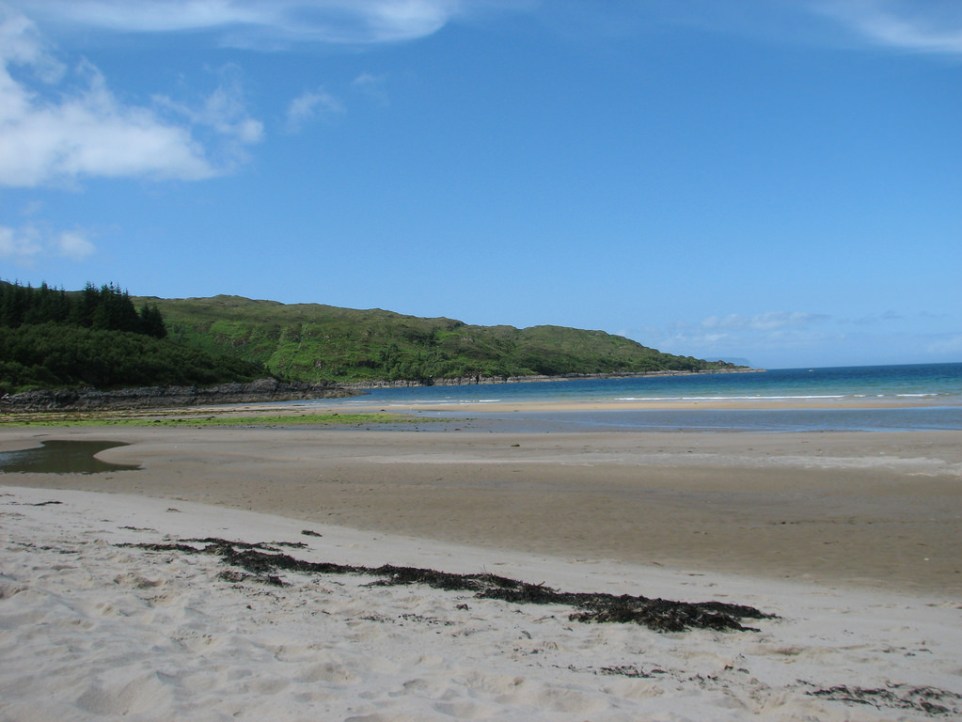
Ardnamurchan - copywright Dave Wilkie

Ardnamurchan – copywright Dave Wilkie

If we had the opportunity to start again, what world would we build?

That was the question posed by the makers of Channel 4 documentary / reality TV show, Eden. But the first challenge facing the 23 new inhabitants of ‘Eden’ (in reality a 600-acre estate in Ardnamurchan on the Western coast of Scotland) was basic survival. Living outdoors in Scotland in March is no joke: it is quite possible to experience all four British seasons in one day, and hypothermia is a real risk. Not to mention the ferocious Scottish midges.

So how did our budding survivalists fare with their survival priorities?

Positive mental attitude

The first rule of survival is a positive mental attitude, something the group had bags of (well until the first falling out). They practiced their team-building by creating a luxury toilet arrangement. I’m all for good hygiene, but I suspect in a real survival situation, they’d be prioritising a roof over their heads.

Score: 8/10 – with a few exceptions, everyone seems happy to be here.

Shelter

Hands down to the group. After a practice run, they quickly constructed a fairly sturdy shelter using straw bales, tree branches and tarpaulin. Individuals were partly chosen for their skill sets, and carpenter Raphael quickly proves his worth. With individual bed spaces and storage solutions, it evens stands up to the Scottish weather. For now.

As of week two, Anton seems to be the only person thinking ahead to winter and a more substantial home that may stand up to the 60mph winds that frequently batter this Scottish coastline. Unfortunately it seems like the rest of the group are more interested in tepees and holding meetings. I get the feeling Anton is not going to be around for long.

Score: 7/10 – they have a good shelter for now, but I hope someone else joins Anton in starting to think about winter quarters.

Water

Streams in the Scottish highlands tend to be pretty clean, however given there’s a herd of sheep and goats wandering around, some form of water purification would be advisable. We don’t get to see whether the group have been given water purification tablets, or if they’re boiling all water before use, but given that none of them seem to be permanently attached to the luxury toilet, it’s safe to presume they’re not suffering too much.

Score: 10/10 – everyone’s still alive and kicking.

Fire

Fire. Warmth, hot food and for the castaways, hot showers (what is this, a hotel?). In the first few weeks the group graduate from an open fire, to a barbeque and then an oven. One of the stars of the castaways is chef Stephen who seems to be able to create a Michelin-starred meal from the most basic of rations. Potato four ways, anyone? He can come cook for me anytime.

9/10: Fire is key to survival and the group have this sorted. Though I dread to think how many trees will have been toppled by the end of the year to fuel their bathing habits.

Food

Stangely, food seems to have been pretty low on the group’s priority list. Or perhaps it’s just me who’s always thinking of her stomach. Creating home comforts such as a hot shower and homebrew comes ahead of actually getting the vegetables they’ve been provided with in the ground.

There’s a reason why our ancestors spent the majority of their days gathering and growing enough food to survive: food in the wild is not an instantaneous affair. The group were given the luxury of start up rations designed to last until they could become self-sufficient. But have they underestimated just how long this will take?

Score: 4/10 – survival is about thinking long-term right from the beginning. Let’s hope our castaways get a good early crop of vegetables before the potatoes run out.

Will they survive Eden

It’s fairly safe to say Channel 4 is not going to stand by and watch people starve, but there is more to survival than putting food on the table. Mental strength is the number one requirement for survival and only time will tell if all these castaways have enough of that to survive.