The 10 Best Tips to Smash Your First 10K Race

10-tips-first-10k-race

There’s a reason ten kilometres is the most popular race distance. For new runners, it’s achievable but challenging and for more experienced runners, it’s a chance to show off speed and strength.

But if you’ve just completed your first 5K run, then a 10K race may feel like a long way off. You may be thinking that the 5K run felt hard enough; that there’s no way you could have done two loops of that course – it was tough enough just walking back to the car afterwards.

But, let me let you in on a secret. Everyone feels like that at the end of a tough race, whatever the distance. I swore after doing my first half-marathon, that I could never run further than that. And admittedly, I still haven’t got round to running a ‘proper’ marathon, but last year I did run an ultra-marathon. And yes, I was adamant at the end of THAT that I couldn’t run another step. But I know that if that half-marathon had been 15 miles rather than 13.1, or the ultra 45 miles rather than 41, I would still have made it to the finish line.

This is the secret to the mental game of running. Whatever distance you are there to do, you can do. If you’ve done the right preparation, you just need to keep that distance and the finish line in mind, and with a bit of grit and determination, you will get there. So if, as you’re proudly clutch your 5K medal and hug your supporters, there’s a tiny little voice inside of you saying ‘but what if I could run 10k?’, I am here to tell you that you can. However much it feels an impossible challenge at this moment in time.

Mental toughness aside, as with any race, the right preparation is key. I’ve pulled together ten top tips to give you the best chance of achieving the result you deserve on race day.

1. Give yourself enough time to prepare

Doubling your distance doesn’t happen overnight. Leave yourself plenty of time to build up your training gradually before race day. This ten-week training plan may provide a useful guide to the rate at which you may want to increase your training. Remember – you can adapt it to suit your target time.

2. Don’t over train

Aside from doing no training at all, probably the worst thing you can do is over train. If you’re pushing your body hard, it needs recovery time. This is as true if you’re a beginner runner as it is for an Olympic athlete, though your tolerance for training will be quite different.

Make sure you schedule in rest days each week and prioritise rest time as much as you prioritise training. Rest activities may involve going to bed earlier, having a hot, relaxing soak in the bath or spending an evening watching Netflix (yes, you can quote me on that).

3. Include some strength and flexibility training

As you’re pushing up the distance, strength and flexibility training becomes more important to keep yourself supple and avoid injury. This set of basic strength exercises don’t require any special equipment and at least one can be done in front of the telly. 🙂

Evidence shows that increasing your flexibility can improve your running performance without adding extra miles. Incorporate these exercises designed to improve your range of motion, into your running routine and you should soon notice a difference.

4. Add in speed work

You may be thinking this is starting to sound a bit too hard-core, but remember – everything is relative. Your speed work is not going to be the same as Mo Farrah’s speed work. It just means having a session a week where you run or jog faster for shorter periods of time.

Speed work gets your body used to running at different speeds. Over time, it will make you faster and fitter – whatever pace you run at. Have a look at this post on speedwork for beginners for some suggested sessions (hint: if you’ve never done any speedwork before, I’d start with the 5K sessions and build up to the 10K).

5. Invest in a foam roller

It may not look like much, but this humble piece of kit can help prevent injury and improve recovery. I’m not going to lie, it’s not always the most comfortable exercise, but stick with it. If you’ve no idea where to start, there’s a good article here with some basic exercises.

6. Get to the race in plenty of time

Last weekend, I turned up at a race with just enough time to nip to the toilet and get ready before heading to the start. I wasn’t anticipating a half-hour queue for the loo. After that, getting ready was a bit of a rush and needless to say, I wasn’t in a very relaxed frame of mind when I got to the start!

Don’t make my mistake: leave yourself plenty of time to get to the race (taking account of traffic) and get ready. There are often long queues for the toilets so take this into account! That way you’ll get to the start physically and mentally prepared for the race ahead.

7. Stay relaxed and positive

Stay relaxed. Easier said than done, right? But remember, you’ve done all the hard work in preparing for the race – all you have to do is keep putting one foot in front of the other until you reach the finish line.

For some people, listening to music helps them relax and focus ahead of a race. (Though be aware that many races now ban headphones during the race itself.) For others, having a friend along to keep them company is a better way to keep their spirits up.

8. Warm up properly

I know, warming up is the number one rule of running without injury. You don’t need me to tell you that. If you’ve got all the way to race day injury-free, then I imagine you’ve been doing a good job of warming up for your training runs. So don’t go and blow it on race day. Yes, it’s hard to warm up when you’re outside the comfort of your own home. And yes, it’s even harder to stay warm when packing into a pen with a hundred of other runners, all impatiently waiting for the start of the race.

But even a short warm up will help prepare your body physically for the race ahead. A gentle jog from the car park (or the train station) to the start of the race will help warm you up. Once you’re in the designated start area, keep your arms and legs moving, even if you have to do a bit of jogging on the spot to stay warm!

9. Set off steadily

If you’re in a big race, you may not get much choice about this! The crowd-shuffle at the beginning can continue well past the official start line. But even so, resist the temptation to start off fast. It’s hard when you’re feeling excited and raring to go, but you’ll feel the benefit of a slow start later on in the race.

Practice this in training. Time yourself for the first half of your run, then reset the clock for the second half. Your aim is to complete the second half in a faster time.

10. Give it your all

By the time you get to the nine-kilometer mark, you’re going to be feeling pretty tired. Your legs are screaming at you to give them a break, and getting oxygen into your body feels much harder than it did eight kilometers ago.

But you’re nearly there! Nothing can stop you now. So if you’ve been going slow and steady up to this point, now is the time to give it your all. Hear the cheers of the crowds lining the approach to the finish? They’re cheering for you. See the banner up ahead with that beautiful six-letter word emblazoned across it? That is your finish line. Run for it with everything you have left. Then congratulate yourself on having smashed your first 10K race.

And as you hang your 10K medal proudly alongside your 5K medal, you may think that was as far as you could possibly go. And for that run, it was. As for the next race? Well, that’s for another day.

Enjoyed this article? You may like my other posts on How to Start Running, Stick With It and Enjoy It and How to Train for Your First Ultramarathon.

The Etiquette Guide for Wild Campervan Adventures

Campervan-etiquette

In my humble opinion, one of the best things about owning a campervan is having the freedom to park up in a remote location, settle in for the night then wake up for a morning run from your mobile doorstep. And a lot of the time it’s as simple as that. But if you want to avoid giving yourself – and other campervanners – a bad name, there are some essential pieces of etiquette you should know.

First up, the legal bit. The laws around wild camping vary depending which country you’re in. Remember that all land is owned by someone, even if it’s classed as ‘public’ land. So your best option is to get permission from the landowner before parking up for the night. In England and Wales, wild camping in technically illegal so you’ll need landowner’s permission to stop overnight. In Scotland, wild camping in tents is allowed, but the law around campervans is a little hazier. If you’re out of people’s way, not obviously parked on someone’s land and don’t make a nuisance then ‘informal camping’ is tolerated in most places. Across Europe and further afield the laws vary: there’s a useful guide here on which European countries do allow wild camping.

With that bit out of the way, if you fancy a bit of wild or stealth camping in your van, then here’s a quick guide to essential etiquette for wild or informal camping in your van.

Don’t ignore ‘no overnight parking’ signs

If someone has gone to the trouble of putting up ‘No Overnight Parking’ signs it’s a clear indicator they’ve had trouble with campers before. If you decide to stay regardless, you may get a rude awakening by an angry landowner, or even the police. A lot of local authorities in England are cracking down on previously frequented overnight stops. Even if you want to argue about the technical legalities of this, please don’t give campervanners a bad name by blatantly ignoring the signs.

If you’re struggling to find somewhere to stop for the night, it’s worth trying pubs (particularly in remoter areas). They may be happy for you to park up overnight if you eat and have a few drinks inside.

Park up late and leave early

No one’s likely to take much notice of a van that’s gone in the morning. Spending the day lounging outside your van with a barbecue and the awning out, however, is more likely to draw the attention of an unfriendly landowner. If that’s the kind of camping you’re after, then pay for a campsite.

It’s also a good idea not to stay in the same spot for more than two nights on the trot. After all, one of the joys of wild campervanning is waking up to a different view each morning.

Keep the noise down

As above, the best way to enjoy success with wild camping it to be unobtrusive. That means no loud campervan parties (unless you’re really in the middle of nowhere!). If you park up outside of towns and away from houses, you’re unlikely to have a problem and can karaoke along to your heart’s content. If you’re stealth camping in a town, you’ll need to be a bit more careful. Blackout curtains can help, as does accepting you’re in for an early night.

Leave no trace

It sounds obvious, but litter is one of the main gripes about wild campers, and in some places has resulted in wild camping being banned altogether. It’s easier in a campervan than a tent, so there are no excuses for not taking your litter with you.

Be considerate when toileting

I haven’t come across this so much in the UK, but I have in Europe, where popular campervan car parks are turned into open-air toilets. It’s not nice and it definitely gives van-dwellers a bad name. If you don’t have toilet facilities in your van, pick a pee-spot that’s well away from any watercourses. Carry a trowel and bury more solid waste, and bag toilet paper to dispose of in a bin.

Don’t run generators or engines late at night

Another thing that shouts, “Hello! I’m illegally camping here!” is running engines at night. And generators are most definitely a no-no. If you need to charge your leisure battery, do it during the day. If you need more electricity than that, consider paying for a site with a hook-up.

Empty chemical waste at a designated disposal area

If you’re lucky enough to have a toilet in your van, make sure you dispose of the contents appropriately. Most public toilets are not suitable for emptying chemical toilets, so you may have to check-in to a campsite for the night. Use it as an opportunity to have a hot shower before you hit the road again!

Be considerate, but have fun!

Wild campervanning allows you to spend time in some truly beautiful landscapes. Respect these landscapes, be considerate to other people and you’re guaranteed an enjoyable and memorable trip.

How to Kit Yourself Out for Climbing for Under £100

climbing-kit-100-quid

You don’t need much gear to start climbing and if you’re cunning with your shopping you could bag everything you need for £100

Having invested thousands of pounds in climbing kit over the years, I can attest to the fact that it can be an expensive sport. But if you’re just starting out, it doesn’t need to be. In fact, it’s quite possible to buy the basic kit you need for climbing for under £100. Don’t believe me? Here’s how.

Basic rock climbing equipment

If you’re new to climbing, it’s likely that you’ll mostly be climbing at your local wall. Most walls will have equipment you can hire to use in the centre, but if you’re serious about climbing, the first pieces of kit you’ll need are shoes, a chalk-bag and chalk.

Climbing shoes

There’s this whole myth that climbing shoes should be painfully tight, so you can really stay in touch with the rock. Y’know. Man. Let me set one thing straight: if your climbing shoes are too tight they will hurt and that will stop you enjoying your climbing (unless you have some kind of sadomasacistic climbing thing going on). However, it’s also true that shoes do stretch and mould themselves to your feet. This is more likely with leather shoes than synthetic, and not at all likely if your climbing shoes live in the cupboard because they are just too painful to put on.

My best tip for choosing your first pair of climbing shoes? Pick something that’s snug but comfortable. Yes, they will be tighter than your sloppy trainers, but you should be able to put them on and stand on small holds without descending into whimpers of pain. Check they don’t rub at the back or dig into your heel and that they’re wide or narrow enough to accommodate your foot snugly.

Also bear in mind that the really cool looking, down-toed shoes such as the La Sportiva Futuras (which are indeed a thing of beauty) are designed with experienced climbers in mind. Climbers whose feet have been accustomed, through many years of wearing pointy shoes, to point downwards. Your feet have probably not reached this stage. They also tend to have thinner rubber, ‘cos high-level climbers have pretty good footwork (allegedly) and can dab their foot on the right hold first time. If you choose (against the friendly shop assistant’s advice) to go with a pair of performance shoes, you’re going to start off a very expensive shoe habit.

As you progress in your climbing career, you’ll get to know what style and brand of shoe suits your foot best. And let me tell you this; there’s nothing like the satisfaction of a perfect-fitting climbing shoe. Ahhhh.

Top picks:

Chalk bag and chalk

Old-skool climbers may tell you that chalk is completely unnecessary and back in t’ day, they just use to spit on t’ hands and get on with it. Personally, I think ninety-nine percent of climbers use it for a reason. It helps dry your hands out and prevents your sweaty fingers slipping off sweaty holds.

It’s pretty easy to get hold of a cheap chalk bag in any shop sale, or you can buy a full-price one for about a tenner. Or if your budget’s really stretched, why not get creative and make your own? A piece of accessory cord is a good belt substitute and a chalk ball will only set you back a couple of quid.

Top picks:

Harness and belay device

Though you could quite happily spend a lifetime bouldering, if you want to progress to roped climbing you’ll want to invest in a harness. Harnesses range from super lightweight Alpine-style harnesses to well-padded styles with plenty of gear loops. I’d definitely advise you to try before you buy – most outdoor shops will have a rope somewhere for you to dangle from.

If you’re looking online, don’t make the mistake of just going for the cheapest option. Although Alpine-style harnesses tend to sit at the lower end of the price spectrum, this is for a reason. They’re designed to be worn over several layers of clothing when mountaineering. (Note: hanging on a rope is considered rather bad form in mountaineering.) With the lack of padding, if you’re dangling on a rope for any length of time, it’s likely to be an uncomfortable experience.

When it comes to belay devices you’ll be looking at either an assisted braking device, such as the GriGri 2 or a more traditional, ‘tuber’ style device. Although it’s becoming common for people to learn to belay at climbing walls using an assisted braking device, these are a) more expensive, and b) less versatile that the humble tuber. The Black Diamond ATC XP (£16.99) and DMM bug (£11.50) are both popular devices.

Top picks:

Where to buy cheap climbing gear

Your local climbing wall shop is a good place to start. They typically have a range of gear available and will certainly stock essential kit for new climbers. Climbing walls sometimes sell off their old hire shoes for super-cheap prices, but unless you’re really desperate I’d steer clear; they’re likely to be pretty battered and worn out.

Climbing shops often sell hugely discounted gear at various times of year. Keep your eye out and it’s easy to snap up a bargain. Rock + Run are one of my favourites – at the time of writing (February 2017) you can get a pair of Edelrid Tempest shoes, Edelrid Smith Climbing Harness, Wild Country belay device, Red Chilli chalk bag and a chalk ball for just £67.

If you’re taking this approach, it’s definitely worth taking some time to try on different shoes and harnesses so you know what size you are in which brands. Also, when you can afford it, go back to the shops you tried kit on in and BUY FROM THEM. Seriously – they need your support.

Buying second-hand

I would advise not buying climbing gear which has a safety element (e.g. ropes, harnesses) second-hand unless you know the owner really well and can guarantee it’s in good condition.

However, for other gear, such as shoes and chalk bags looking for second-hand equipment is a good money-saver. Now I’m a bit squeamish about the thought of buying second-hand shoes (thinking of other people’s sweaty feet in them just makes me go ‘ewww’), but it’s not uncommon for someone to buy a pair of climbing shoes online or in a sale and only wear them once or twice before decided they don’t like the fit. Keep an eye out on the noticeboard at your local wall or on the UKC Gear Forum and you may be able to grab yourself a top-quality pair of shoes for a bargain price.

Join a club

Desperate to move onto routes or start climbing outside? Your best bet to learn the ropes (literally) and avoid having to buy any expensive equipment (at least in the short term) is to join a club. Most climbing clubs have members of mixed abilities and you’re more than likely to find an experienced climber who’s willing to take an enthusiastic newbie under their wing.

The other good thing about clubs is that they may have equipment they can loan out to you, or club huts (which tend to be conveniently located in good climbing areas). The Climbers’ Club has eight of the best huts, but you do need to be an experienced outdoor climber to join.

You’ll probably be expected to know how to belay and second a route outside before joining a club. If you’re in any doubt as to your belaying skills, take a course at your local climbing wall or from a qualified instructor to reassure yourself (and potential climbing partners!) that you can catch a fall safely.

Prices correct as of 21st February 2017.

How to Keep Warm on the Bike in Winter

keep-warm-on-bike

With the right kit, there’s no excuse not to get out on the bike in winter

Freezing temperatures, wind and rain is enough to send most cyclists scuttling back to the warmth of indoor training. But even in winter, a ride outside can be much more satisfying than spinning the wheels on the turbo trainer. Catch a rare day of winter sun and you may get some of the best riding conditions of the year.

Whether you’re heading off down the trails or hitting the road, here are our top tips to keep warm on winter rides. So you have no excuses for not getting out there!

Choose the Right Clothing

Cycling in winter is a tricky balance. It’s soooo cold when you leave the house that it can be really tempting to pile on layer after layer. But do this and half-way up that first hill, I can guarantee you will be sweating your socks off and regretting it. It’s best to leave the house a little chilly and warm up into the ride than cart around extra layers you don’t need.

A good base layer, such as the Spotti long sleeve cycling jersey, is a must for cold weather riding. Choose one that wicks away moisture as well as keeping you warm. Windproof baselayers are a good idea to block freezing north winds, but they’re often slightly heavier and thicker-weight. If you’re prone to overheating a better option may be to carry a super-lightweight windproof top in your jersey pocket for downhill sections.

Arm warmers are great for early and late season rides – when the air is just a bit chilly first thing, but it warms up nicely later on.

Look After Your Extremities

While your legs will be doing a great job of keeping themselves warm, it’s the outer parts of your body you need to look out for in the cold. Your fingers and toes don’t do much moving when you’re on the bike, so focus on wrapping them up warm. If you’ve ever experienced the dreaded hot-aches, you’ll appreciate just how painful cold hands can be!

Finding the right winter glove is always tough. You want something that’s going to keep your fingers warm, but still give you the dexterity you need to change gears and use the brakes. Plus you need good grip, particuarly in wet conditions. If dexterity is your top priority, then you may want to go for a full fingered glove such as the Craft Storm Bike Glove. However, if you can sacrifice a bit of dexterity in favour of warmth, then a lobster split finger glove such as the Pearl Izumi Ride Pro AMFIB glove may suit you better.

Make sure you pick a glove that’s windproof and ideally waterproof or water resistance. Long cuffs will help keep your wrists warm and improve blood flow to your hands. In the coldest conditions, a thermal liner glove such as the Pearl Izumi Thermal Lite Glove will provide an extra layer of warmth.

And don’t neglect your feet! Whether you’re cycling on wet roads or down muddy dirt tracks, your feet are likely to get wet in winter. Overshoes are a winter essential, to stop your feet freezing in your cycling shoes. Some overshoes are just windproof and are often made of neoprene to keep your feet warm even if they do get wet, but there are also waterproof options.

Some people swear by waterproof socks, such as the SealSkinz Hydrostop but I’d say this is a personal choice. They’re a bit like Marmite – you either love them or hate them. Merino wool is a popular choice as it provides warmth without bulk. If you get really cold feet, you could even opt for heated insoles. Mmmm…

Keep Your Head Warm

On whistling downhills your noggin can get pretty chilly, and frozen ears are one of my least favourite parts of winter riding. As bike helmets are designed primarily with weight and ventilation in mind, they don’t help with keeping your head warm in cold weather.

For spring and autumn rides, a thin buff may be a good compromise between warmth and breathability. We recommend going for two; one for your neck, and one for your head. But when the temperatures really plummet, you’ll be after a decent insulating hat. The Arc’Teryx Rho LTW Beanie is made of warm merino wool and looks just as cool walking about town as on the bike. If it’s windy and wet out, then the Castelli Tempesta Hood is made from waterproof and water-resistant materials – it also has a neck gaiter to provide full head and face protection. Riders with long hair may like the Pearl Izumi Barrier Skull Cap which has a ponytail-friendly rear flap.

Stay Dry

Getting wet is a sure-fire route to getting cold. Though you may not want to wear a waterproof jacket all day if rain’s forecast then it’s worth having a lightweight jacket to hand. The Endura FS260-Pro Adrenaline Race Cape provides a good compromise between waterproofness, breathability and cost and is small enough to roll up into your jersey pocket.

If you know you’re going to be out in bad weather, or are looking at a tougher option for the trails, then the Gore Bike Wear One jacket is a good all-rounder, or, for a less jaw-dropping price, the Enduro MT500 II jacket.

Plan a Pit Stop

It’s important to keep well hydrated and fueled on long rides, particularly in winter. But stopping for longer than five minutes is guaranteed to chill you down fast. Planning your route to take in a nice warm cafe is a good compromise (particularly if they do great cake). Hot tea will warm you up and you can take a break without losing all the heat you’ve been generating on the bike. The hardest part will be resisting the temptation to stay all day.

How to Make Apple and Blackberry Fruit Leather

apple-blackberry-fruit-leather

The one thing I miss most when backpacking for long periods is fresh fruit and vegetables. There are only so many rations of noodles, dehydrated meals and couscous I can take before I start longing for an apple and a plate of roasted veg. Or fresh blueberries. Mmmm…

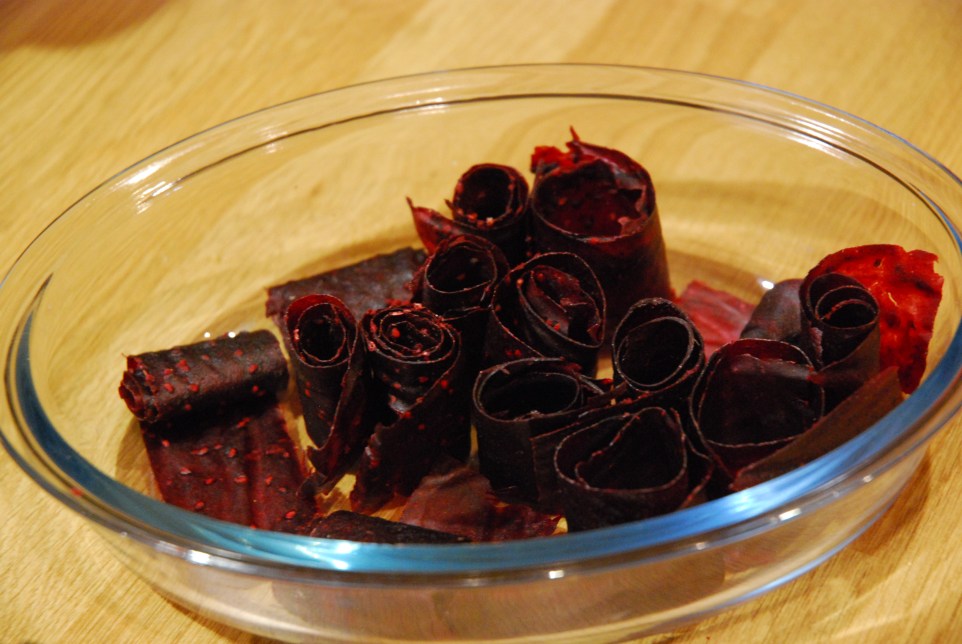
My saviour in these times of need? Fruit leather. The sweet, sharp taste of real fruit in a neatly packaged, long-lasting roll. And they’re not just for backpacking – these make great snacks for kids or help grown-up kids get through a dull afternoon at the office. What’s more, they’re vegan and gluten-free.

If you live in the UK, you’ve probably noticed the brightly coloured packs of Bear Yo Yos in the snack aisle. If you’re based in the U.S. there’s a useful list of fruit leathers here. But if you’re anything like me, the price of these goodies are sometimes enough to make you wince. The good news is, they’re super easy to make at home. So if you’ve got a glut of fruit that you don’t know what to do with, read on to find out how to make your own home-made fruit leather.

apple-blackberry-fruit-leathe

What fruit to use?

You can make fruit leather out of pretty much any fruit you like! I happened to have a bag of frozen apple slices and some blackberries left over from last year’s harvest so I chose to go with this classic combination. Depending on the season, you could try some of these fun flavours:

  • Rhubarb and ginger
  • Mango and pineapple
  • Strawberry and vanilla
  • Wild blueberry
  • Raspberry and banana

The fruit you use will determine how much sugar or other sweetener you need to add. As the apples I had were quite sharp, I used a couple of tablespoons of brown sugar. Alternatively, you could use honey or agave syrup to sweeten the leather. If you’re using a sweet fruit, such as banana, you may not need to sweeten it at all.

apple-blackberry-leather-ingredients

Oven vs dehydrator?

Many fruit leather recipes recommend using a dehydrator to dry out the fruit paste and if you’re planning on making a lot of fruit leather then it may be a worthwhile investment. But if you’re making a one-off batch it’s just as easy in the oven. As we don’t have a dehydrator (yet!) the oven was the only option for me.

apple-blackberry-leather-puree

apple-blackberry-leather

Apple and Blackberry Leather recipe

Preparation time: 40 minutes
Cooking time: 4 – 10 hours (depending on thickness)

Ingredients:
3 cups (300g) diced apples
2 cups (200g) blackberries
2tbsp light brown sugar
1 tsp ground cinnamon

Method:

  1. Place all the ingredients in a heavy-based saucepan and heat gently for around 20-30 minutes until the fruit has broken down into a thick mush.
  2. While the fruit is cooking, line a baking tray with baking parchment or a silicone liner.
  3. Let the fruit cool slightly then blitz in a food processor or blender to get rid of any lumps.
  4. Sieve the pulp mixture onto the lined baking tray and use a spatula to spread it out – it should be no thicker than a pound coin. The thicker it is, the chewier it will end up. I went for a thinner option spread over two baking trays which ended up crispier. You can also skip the sieving if you don’t mind blackberry seeds in your fruit leather.
  5. Place your tray in the oven and set it to 80°C / fan 60°C / gas mark 1/4. Leave the leather to dry out until it is slightly tacky. If you have very thin leather (like me) this will take around 4-5 hours. If you’ve opted for thicker leather this could take up to ten hours.
  6. Cut the fruit leather into strips and roll up into coils. You can store them in an airtight container in the fridge for up to a month, or pop them in the freezer ready for your next backpacking trip!