How to Survive in Eden

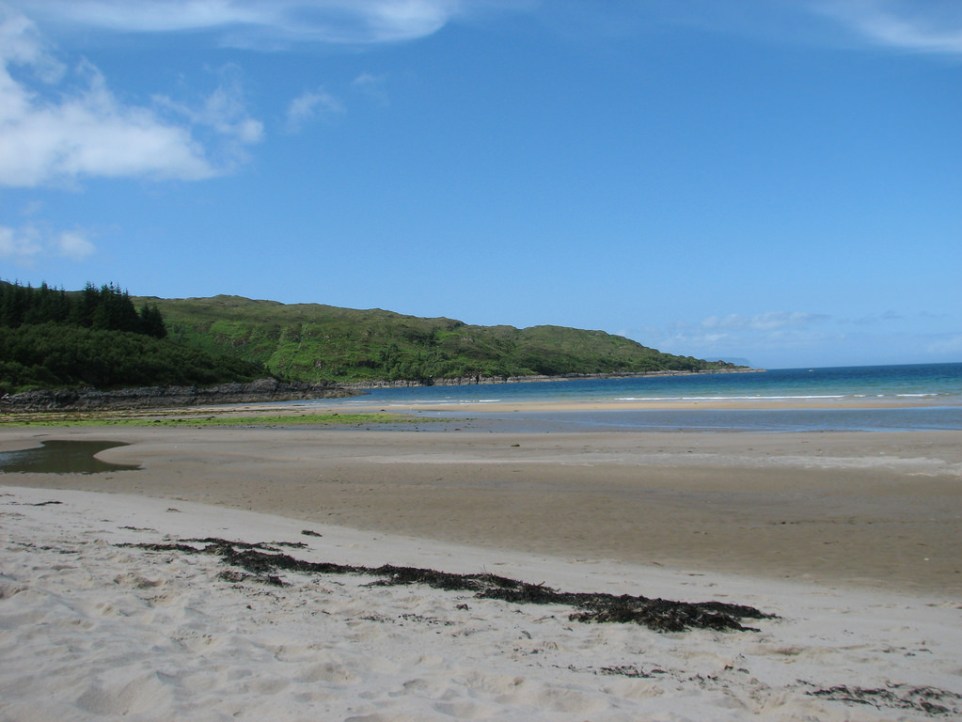
Ardnamurchan - copywright Dave Wilkie

Ardnamurchan – copywright Dave Wilkie

If we had the opportunity to start again, what world would we build?

That was the question posed by the makers of Channel 4 documentary / reality TV show, Eden. But the first challenge facing the 23 new inhabitants of ‘Eden’ (in reality a 600-acre estate in Ardnamurchan on the Western coast of Scotland) was basic survival. Living outdoors in Scotland in March is no joke: it is quite possible to experience all four British seasons in one day, and hypothermia is a real risk. Not to mention the ferocious Scottish midges.

So how did our budding survivalists fare with their survival priorities?

Positive mental attitude

The first rule of survival is a positive mental attitude, something the group had bags of (well until the first falling out). They practiced their team-building by creating a luxury toilet arrangement. I’m all for good hygiene, but I suspect in a real survival situation, they’d be prioritising a roof over their heads.

Score: 8/10 – with a few exceptions, everyone seems happy to be here.

Shelter

Hands down to the group. After a practice run, they quickly constructed a fairly sturdy shelter using straw bales, tree branches and tarpaulin. Individuals were partly chosen for their skill sets, and carpenter Raphael quickly proves his worth. With individual bed spaces and storage solutions, it evens stands up to the Scottish weather. For now.

As of week two, Anton seems to be the only person thinking ahead to winter and a more substantial home that may stand up to the 60mph winds that frequently batter this Scottish coastline. Unfortunately it seems like the rest of the group are more interested in tepees and holding meetings. I get the feeling Anton is not going to be around for long.

Score: 7/10 – they have a good shelter for now, but I hope someone else joins Anton in starting to think about winter quarters.

Water

Streams in the Scottish highlands tend to be pretty clean, however given there’s a herd of sheep and goats wandering around, some form of water purification would be advisable. We don’t get to see whether the group have been given water purification tablets, or if they’re boiling all water before use, but given that none of them seem to be permanently attached to the luxury toilet, it’s safe to presume they’re not suffering too much.

Score: 10/10 – everyone’s still alive and kicking.

Fire

Fire. Warmth, hot food and for the castaways, hot showers (what is this, a hotel?). In the first few weeks the group graduate from an open fire, to a barbeque and then an oven. One of the stars of the castaways is chef Stephen who seems to be able to create a Michelin-starred meal from the most basic of rations. Potato four ways, anyone? He can come cook for me anytime.

9/10: Fire is key to survival and the group have this sorted. Though I dread to think how many trees will have been toppled by the end of the year to fuel their bathing habits.

Food

Stangely, food seems to have been pretty low on the group’s priority list. Or perhaps it’s just me who’s always thinking of her stomach. Creating home comforts such as a hot shower and homebrew comes ahead of actually getting the vegetables they’ve been provided with in the ground.

There’s a reason why our ancestors spent the majority of their days gathering and growing enough food to survive: food in the wild is not an instantaneous affair. The group were given the luxury of start up rations designed to last until they could become self-sufficient. But have they underestimated just how long this will take?

Score: 4/10 – survival is about thinking long-term right from the beginning. Let’s hope our castaways get a good early crop of vegetables before the potatoes run out.

Will they survive Eden

It’s fairly safe to say Channel 4 is not going to stand by and watch people starve, but there is more to survival than putting food on the table. Mental strength is the number one requirement for survival and only time will tell if all these castaways have enough of that to survive.

Wild Walks: The Dales Way

Yorkshire Dales

Characteristic Dales’ landscape

Wild Walks is a series of blog posts covering some of my favourite walks in the UK and overseas. The Wild Walks may be short or long, but they all take you to beautiful places and give you moments of solitude.

I’m starting close to home, with a meander through the rural countryside of the Yorkshire Dales. Rolling hills scattered with dry stone walls, a treasure hunt in a church and many places to bathe your tired feet are just some of the highlights of this multi-day trek.

So what is the Dales Way?

A 81 mile ramble through the Yorkshire Dales National Park and the lowland hills of the Lake District, in the heart of Northern England.

Sounds good – tell me more!

The Dales Way begins in the popular market town of Ilkley and follows the rivers and valleys up through the Yorkshire Dales north and west to finish on the shores of one of England’s most famous lakes, Lake Windermere. If 81 miles isn’t enough of a challenge then there are three optional extensions to the walk which run from Leeds, Harrogate and Bradford.

How long does it take?

Most people take between four and seven days, depending on how far you want to walk each day. Your leg lengths may be determined partly by where you choose to stay (see below). The walk is signposted along the route, but these can sometimes be hard to spot so take a map and compass to double check your route.

Wild Walk highlights

Some people choose to end their first day of walking at the dramatic ruined Priory of Bolton Abbey, and it’s easy to see why. If you’re just passing through then there’s a cafe and some handy toilets.

The section between Bolton Abbey and Grassington has some of the prettiest river walking on the route, though on a sunny weekend, you won’t be the only one enjoying it. Look out for the spectacular Linton Falls, just before you get into Grassington.

After Grassington you get your first real climb of the walk, up through the site of medieval villages onto the limestone hillside. This is my favourite part of the walk, with beautiful views across the valley to Kilnsey moor.

After Kettlewell you leave the crowds behind and set off up to Buckden and into the more remote parts of Upper Wharfdale. Hubberholme is a secluded village with a small Norman church that is definitely worth visiting, if it’s open. The crafter of the oak pews left his trademark mouse carved into them – see how many you can find!

Langstrothdale is a valley of solitude. Enjoy the river whilst you can, as you eventually turn off onto open (and boggy!) moorland and climb to the highest point of the route – 520m. As you drop down, you’ll see the famous Ribblehead viaduct in the distance – it’s not strictly on the Dales Way, but you may deviate if you’re staying at the Station Inn.

Back on route, there’s some more boggy moorland to negotiate before you drop down into Dentdale, and civilisation (of a sort). It’s back to the valley and river walking through to Sedburgh and on to the Lune Valley – definitely one of the quieter parts of Cumbria. Look out for the impressive viaduct (well, you can’t really miss it…) just before you cross the M6.

From then on it’s rolling hills (more tiring than they appear), until at last you finally see the waters of Windermere ahead of you. Dipping your toes in the lake is surely an obligatory end to the Dales Way.

How fit do I need to be?

The Dales Way follows rivers and valleys for much of its length. Whilst there aren’t too many steep hills, the terrain can be rough in places and there is a bit of a sting in the tail towards the end. You’ll need to be fit enough to walk for consecutive days and have waterproof boots for the boggy sections!

What about accommodation?

There’s a huge variety of accommodation along the route, from hotels and B&Bs to camping barns and campsites. The middle section, between Grassington and Dent is remote, and places to stay are few and far between, so it’s best to book ahead. You can find a comprehensive list of accommodation on the Dales Way website.

Transport and logistics

As with many long-distance walks, the logistics of getting to the start and back from the finish are not straightforward. If you’re coming from a big city, such as London, Manchester or Edinburgh, the simplest way is to get the train to the start at Ilkley (regular services from Leeds and Bradford) and back from Windermere station (a short taxi ride from the end of the walk). It’s worth having a look at train times in advance for the return leg – the train from Windermere will take you to Oxenholme where you can jump on the mainline up to Glasgow, or down to Manchester and London.

Getting back to the start from the finish is slightly more complicated and will require additional changes in Manchester and Leeds. Alternatively, Lakes Village Taxis can take up four passengers across to Ilkely for approx £90.

If you don’t fancy carrying everything on your back, The Sherpa Van Project offer a door-to-door baggage service from £8 per bag per day.

Find out more

  • The Dales Way has it’s own website, which has a wealth of information on the route, accommodation and public transport links
  • Harvey Maps have produced a Dales Way map, which contains the entire route on one lightweight, waterproof map – I’d definitely recommend this if you’re thinking about doing the route.
  • The Dales Way guidebook by Colin Speakman is the definitive guide to the route.
  • And if you prefer two wheels then why not try the Yorkshire Dales Cycleway, a 130 mile circular routes that visits most of the dales in the Yorkshire Dales National Park.

How to start running, stick with it and enjoy it

Man and women jogging across a bridge

Running with a friend is great for motivation

Want to get fit but can’t afford a pricey monthly gym membership? Thought about running, but worried that you’re not cut out for it (and yes, we all get out of breath running for the bus)? If so, you’re not alone.

Let me dispel some common running myths:

  1. You don’t have to be super fit. I mean this is kind of the point – you run to get fit.
  2. You don’t need a fancy heart rate monitor/GPS watch/ iPhone tracking device. Really.
  3. Running is for super skinny people in tight lycra and skimpy vests. If that’s your thinking, then please watch this video.

Why run?

Running can be hard work. You will get out of breath, sweaty and yes, you’ll probably ache a bit afterwards. So why do it?

Well for a start, it’s free! No expensive gym memberships or fitness plans. It’s easy to fit into your life; you can run whenever, wherever you want. If you’re looking to shed a few pounds then it burns more calories per hour than most other sports. But the best benefit? It makes you feel great. Running gets all those happiness-inducing endorphins racing round your body, so chances are, if you head out on your run feeling grumpy and stressed, by the time you get back you’ll be feeling more positive and relaxed.

Raring to go, but not sure where to start? Here are some top tips to start running, stick with it and – most important of all – enjoy it.

Get kitted out

Running is one of the cheapest sports. The one essential item you shouldn’t skimp on is a decent pair of trainers. And yes, I know you can probably get them cheaper on the internet, but I would really recommend going into a specialist running shop for your first pair of trainers. They will look at your foot shape and gait (how you run) and will be able to recommend the right pair of trainers for you. Your joints will thank you for it.

Start slow

If you’ve never run before, please, please don’t set out determined to run for an hour the very first time you lace up your brand shiny-new trainers. It will not happen. You will get ten minutes in, feel like crap and slink off back to your sofa feeling depressed.

The best running motto on starting out is ‘keep it slow’. Which probably means that for your first few outings, you’ll do more walking than running.

A good way to start off is by doing intervals: jogging slowly for one minute, then walking for two to recover. Do ten sets of this and you have a thirty minute workout. If that’s too much for you, then cut the times down – run for thirty seconds and walk for a minute and a half. Remember, your goal at this stage is to build up the time you spend running, not to go as fast as possible. If you’re sprinting the running sections, slow down and jog for longer.

If this is the first exercise you’ve done since leaving school then don’t run every day. Treat your body gently and ease into it. Try to set aside time three days a week and then stick to it.

I’ll let you into a secret. The day after you’ve done your first run you will probably sit on the edge of your bed, (try and) stand up, and wince. The second day may be worse… It’s normal to feel some aching in your muscles after running (or any workout), particularly if you’re not used to it. That’s why stretching after you run is so important (check out this excellent guide to stretching for beginners). But if you start feeling real pain, then stop and go and talk to your doctor.

Set a running goal

The best way to make sure you stick with your new running regime is to book a race. Preferably one where you have to pay – there’s nothing like a bit of financial investment to keep up motivation! It could be a one mile fun-run in the local park or a 5km charity run (such as the popular Race for Life) – it doesn’t matter. The key is that you’ve committed to it.

Run with other people

Running is often seen as a solitary sport, but it doesn’t have to be. Running with a friend is a great way to keep motivation up. It comes back to that commitment thing – if you both agree to meet every Tuesday evening after work then it’s harder to slink off home because it’s too cold/dark/wet.

Running with other people can also be more enjoyable. The ideal running pace, particularly when you’re starting out is one where you can talk whilst you run. You can be catching up on the last gossip and before you know it, your run is over. Workout done.

Can’t persuade a friend to join in? Then find a running group. (No, not that group of runners in matching club vests you see bounding up the hills.) There are hundreds of formal and informal groups focused on helping and supporting beginner runners. Many of them are free and some even offer incentives, such as the Sweatshop Running Community.

Don’t give up

This is the hard part. Particularly when winter comes. However, the key to sticking with your running is actually quite simple:

  1. Persistence
  2. Routine

Schedule your running time into your diary and stick to it. If something comes up that’s really non-negotiable, then reschedule your session. Remember, running can be done anytime, anywhere. Everyone can make excuses. Don’t be one of those people.

Look back at all the progress you’ve made since that first hard and sweaty run. Remember how good you feel after those runs (and how good that cake tasted knowing you’ve deserved it). Then lace up those trainers and head out the door.